Blurred vision returning months or years after cataract surgery may be caused by posterior capsule opacification, or PCO, but it can also come from dry eye, a glasses change, glaucoma or retinal disease. An eye examination is needed before deciding whether YAG laser treatment is appropriate.
Written by Sanjog Sandhu. Clinically reviewed and approved by Mr Hiten Sheth.
Key points
• Blurred vision returning months or years after cataract surgery may be caused by posterior capsule opacification, or PCO, but it can also come from dry eye, a glasses change, glaucoma or retinal disease.
• Assessment looks at how vision changed after cataract surgery, vision, eye pressure and the clarity of the posterior capsule, the lens implant, retina, macula and optic nerve.
• YAG laser makes a clear opening in the cloudy capsule behind the lens implant.
• Patients should arrange transport and should not drive until the effects of dilation and treatment have fully worn off.
Understanding the question
Posterior capsule opacification, or PCO, is clouding of the thin capsule that supports the artificial lens after cataract surgery. It is not a new cataract, but it can cause familiar symptoms such as misty vision, glare and reduced contrast months or years later.
Your symptoms, examination findings and priorities need to be considered together before advice or treatment is recommended.
What the assessment looks for
Assessment should check that PCO is the cause of the symptoms and that another problem, such as a change in glasses prescription, dry eye, glaucoma or retinal disease, is not responsible. VISIO’s agreed YAG pathway includes vision and pressure checks, OCT, dilation when appropriate and consultant assessment.
The purpose of testing is not to collect numbers. It is to decide which finding explains the person’s concern, whether another condition is present and which options remain sensible. A result should therefore be discussed alongside symptoms and examination, not read in isolation.
Recovery is a range, not a deadline
Recovery advice describes a usual pattern, not a promise for a particular day. Vision, comfort and activity can settle at different speeds, especially when another eye condition is present. Use the written instructions for your procedure, keep follow-up appointments and ask before driving, flying, swimming, returning to heavy activity or changing drops. A new or worsening symptom matters more than whether it appeared on an expected day.
What may influence the individual plan
The answer can change according to:
• whether PCO is actually the main cause of the blur or glare;
• whether the symptoms justify treatment now;
• individual retinal and pressure-related risks;
• drops, transport and follow-up for that eye.
This is why a general video can explain the principles but cannot replace an examination or a personalised consent discussion.
Treatment, monitoring and next steps
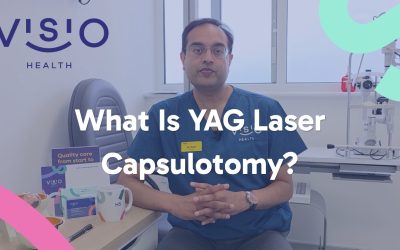
When suitable, a consultant uses the YAG laser to create a clear opening in the cloudy capsule. The laser itself usually takes only a few minutes, but the appointment is longer because of assessment and dilating drops. Same-day assessment and treatment may be possible, subject to clinical suitability.
YAG laser makes a clear opening in the cloudy capsule behind the lens implant. It does not replace the implant, treat every cause of blur or guarantee freedom from glasses.
If observation is chosen, the plan should say what is being monitored, when it will be reviewed and which change should bring the appointment forward. If treatment is advised, the patient should understand its purpose, alternatives, likely recovery and the important risks for that eye.
Preparing for a useful consultation
You can make the first appointment more useful if you:
• bring details of the cataract operation and current eye drops;
• arrange transport because dilation can blur vision;
• tell the consultant about glaucoma, uveitis or previous retinal problems;
• keep the post-laser urgent instructions with you.
At VISIO, adults can normally contact the patient-services team directly. An optometrist, GP or another consultant can also refer. If you are using insurance, check referral and pre-authorisation requirements with the insurer before the appointment. Dilation may be needed, so ask whether you should arrange transport.
Questions worth bringing with you
• What is the most likely explanation for my symptoms or test result?
• Which findings matter most, and is anything else contributing?
• What are the reasonable choices, including observation?
• What result is realistic for my eye, and what cannot be promised?
• Which change should make me seek help sooner?
It is reasonable to take notes or bring someone you trust. The goal is not to make a rushed decision. It is to leave knowing what the consultant thinks, why, and what happens next.
When to seek urgent help
Patients should arrange transport and should not drive until the effects of dilation and treatment have fully worn off. Worsening pain, redness, a sudden loss of vision, a dark curtain, or a sudden increase in flashes or floaters needs urgent eye advice.
VISIO is not a 24-hour emergency service. If an urgent problem occurs when the clinic cannot assess you promptly, use NHS 111 or the nearest emergency eye service or A&E as appropriate. Call 999 for a life-threatening emergency.
Frequently asked questions
When can I drive again?
Drive only when the treating team says it is appropriate, your vision meets the legal standard and drops, double vision or glare are not making driving unsafe.
What if my recovery is slower than someone else’s?
Recovery varies. Follow your own instructions and contact the treating team if symptoms are worsening or you are unsure, rather than comparing days with another patient.
Will YAG laser change my lens implant?
The treatment creates an opening behind the implant. It does not remove or exchange the lens.
Is the laser itself a long procedure?
The laser commonly takes only a few minutes, but the full visit is longer because of checks, dilation, consultation and consent.
Can PCO return after YAG laser?
The central opening normally remains clear, although an opening may occasionally need enlargement or another cause of blur may later develop.
Can I drive home after YAG laser?
Plan not to drive. Dilating drops and the bright examination light can blur vision and increase glare for several hours.
Book or ask VISIO Health
If this question is affecting your sight, comfort or confidence, contact VISIO Health in Wooburn Green for advice about the appropriate consultant assessment.
Call or WhatsApp: 0800 032 2020
Email: [email protected]
Online: use the Book a Consultation or Contact form
VISIO is a family-run, consultant-led private ophthalmology clinic for adults. A consultation is used to understand the whole eye, discuss appropriate options and agree the next step. It is not a promise that a particular treatment will be suitable.
Sources and editorial method
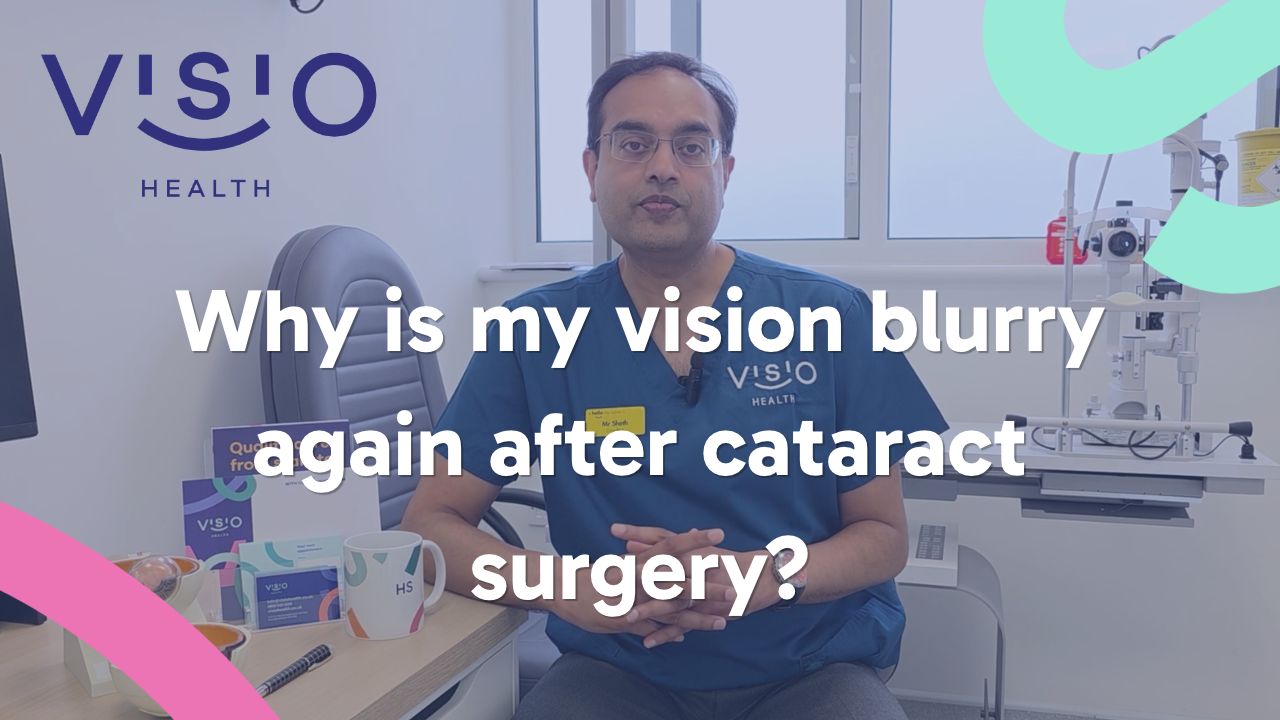
This guide is based on Mr Hiten Sheth’s recorded answer to Q1, expanded for patient clarity using approved VISIO facts and the UK guidance listed below. The expansion explains context, assessment, choices and safety-netting without changing the consultant’s clinical meaning.
• Cambridge University Hospitals: YAG laser posterior capsulotomy: https://www.cuh.nhs.uk/patient-information/yag-laser-posterior-capsulotomy-following-cataract-surgery/
• Moorfields: YAG laser treatment for PCO: https://www.moorfields.nhs.uk/private/eye-conditions-and-treatments/cataract/yag-laser-treatment-for-posterior-capsule-opacification-pco
• Supporting editorial context: NHS cataract information and current NHS eye-hospital YAG laser patient guidance.
• Approved VISIO source: Website Content Source Of Truth, checked for the current service pathway and practical details.