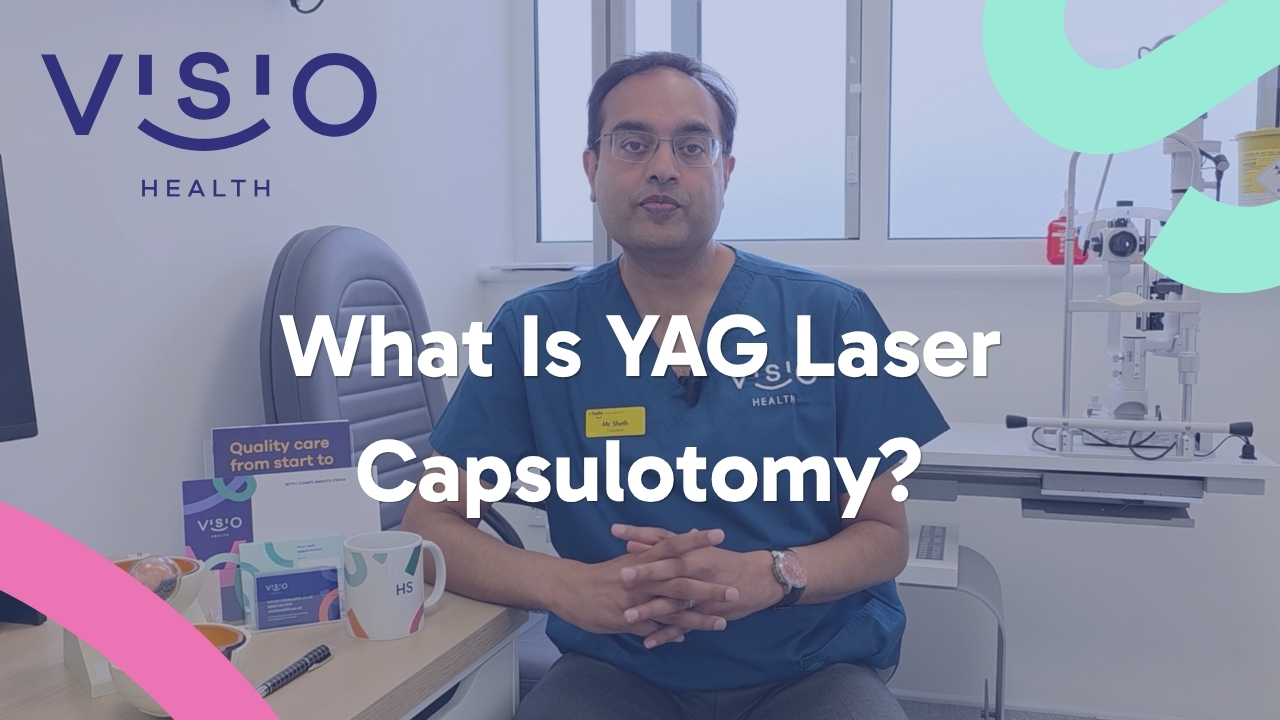
YAG laser capsulotomy is a short outpatient laser treatment for posterior capsule opacification (PCO), a clouding of the thin capsule behind the artificial lens after cataract surgery. The ophthalmologist uses focused laser energy to create a clear opening in the cloudy capsule so light can reach the retina more clearly. It does not remove or replace the lens implant, and it does not mean the original cataract has returned. An eye assessment is needed first because blurred vision can have other causes. The laser itself usually takes only a few minutes, but dilation and checks make the full visit longer. Arrange transport because your vision may be blurred afterwards.
Written by Sanjog Sandhu. Clinically reviewed by Mr Hiten Sheth, Consultant Ophthalmologist.
Key points
• PCO can make vision cloudy, misty or glary months or years after successful cataract surgery.
• YAG laser creates a small opening in the cloudy capsule behind the lens implant; it is not another cataract operation.
• Not every change after cataract surgery is PCO, so the eye should be examined before treatment.
• The laser commonly takes about 5-10 minutes, although the full visit is longer because of tests, dilation, consultation and consent.
• Vision is often temporarily blurred by dilating drops; do not drive home and follow the advice given for your eye.
• Serious complications are uncommon, but sudden vision loss, a curtain or shadow, many new floaters, flashes, severe pain or increasing redness require urgent advice.
Why can vision become cloudy again after cataract surgery?
During cataract surgery, the cloudy natural lens is removed and replaced with a clear artificial lens. The thin capsule that surrounded the natural lens is deliberately left in place because it supports the new lens implant.
Over time, remaining lens cells can grow across and thicken the back of that capsule. This is called posterior capsule opacification, or PCO. Mr Sheth compares it with frost developing on a windscreen: the implant itself may still be clear, but the layer behind it interferes with light passing through the eye.
PCO may develop months or years after cataract surgery. Published NHS patient information commonly describes it in roughly 10-20% of patients, although the rate varies with factors such as age, lens design and length of follow-up. It is sometimes called a “secondary cataract” or “after-cataract”, but the original cataract has not grown back.
What symptoms can PCO cause?
PCO can produce symptoms similar to those caused by the original cataract, including:
• gradually blurred, cloudy or misty vision;
• glare from daylight, headlights or other bright lights;
• colours appearing less vivid;
• reduced contrast, especially in low light;
• difficulty reading, driving, using a computer or enjoying detailed hobbies;
• the feeling that vision is no longer as clear as it was after cataract surgery.
These symptoms are not specific to PCO. A change in glasses prescription, dry eye, glaucoma, retinal or macular disease and other eye conditions can also reduce vision. YAG laser will only help if clinically significant PCO is contributing to the problem.
How do I know whether I need YAG laser or new glasses?
An eye examination is the safest way to distinguish PCO from a focusing change or another eye condition. Your optometrist may identify PCO at a routine sight test, or you can arrange an ophthalmology assessment if vision has become less clear.
At VISIO, the confirmed YAG pathway may include:
• a discussion of your symptoms, cataract surgery and wider eye history;
• measurement of vision and eye pressure;
• OCT imaging where clinically appropriate;
• dilating drops and examination of the lens capsule, retina and other eye structures;
• consultant assessment of whether PCO is the main cause of the symptoms;
• discussion of the expected benefit, limitations, alternatives and individual risks.
Mild PCO that is not affecting daily life may not need immediate treatment. If glasses or another condition explain the blur, the appropriate next step may be different. Treatment should be based on the examination, not simply on how long ago cataract surgery took place.
What happens during a YAG laser appointment at VISIO?
VISIO’s confirmed pathway includes assessment and consultant-performed treatment at the Wooburn Green clinic. Same-day assessment and treatment may be possible when it is clinically suitable, but it cannot be promised before the eye has been examined.
The journey commonly involves:
1. Initial checks. Vision, eye pressure and imaging are completed as appropriate.
2. Dilation. Drops may be used to widen the pupil. They usually take time to work and can blur vision or make lights seem bright.
3. Consultation and consent. The consultant confirms the diagnosis, answers questions and discusses benefits, alternatives and risks.
4. Laser treatment. You sit at a laser machine similar to the microscope used during an eye examination. Anaesthetic drops numb the front of the eye. A contact lens may be placed gently on the eye to steady it and focus the laser.
5. Focused laser pulses. You may see bright lights and hear clicks or beeps as the opening is created in the capsule.
6. Aftercare. The team gives advice specific to your eye, including any drops, checks or follow-up required.
The laser treatment itself often takes approximately 5-10 minutes. The full appointment is longer because of the checks, dilation, consultation and consent. Ask the booking team how much time to allow for your particular visit.
Is YAG laser capsulotomy painful?
Most people are unlikely to feel pain from the laser itself. Anaesthetic drops numb the surface of the eye, and the laser is delivered without an incision or stitches. You may notice pressure or awareness from the contact lens, bright light and clicking sounds. The eye can feel mildly sore, gritty or scratchy afterwards.
Tell the clinician if you are uncomfortable or anxious. “Painless” should not be interpreted as a guarantee that every person will feel nothing at all.
How quickly does vision improve?
Some people notice clearer vision within hours, while for others it takes a few days to judge the result. Immediately after the appointment, vision may be blurred by dilating drops and the bright examination light. New floaters can also be more noticeable for a time.
When PCO is the main cause of the blur, YAG laser aims to bring vision back towards the level achieved after cataract surgery. It cannot reverse another retinal, optic-nerve, corneal or glaucoma-related cause of reduced sight, and it does not guarantee spectacle independence. You may still need the glasses you used before, and occasionally an updated prescription is helpful once the eye has settled.
What are the risks of YAG laser capsulotomy?
YAG laser capsulotomy is commonly performed and serious complications are uncommon, but no laser procedure is risk-free. The consultant will discuss the risks that apply to your eye.
Possible short-term effects or complications include:
• temporary blurred vision, light sensitivity or mild discomfort;
• new or more noticeable floaters;
• inflammation inside the eye;
• a temporary rise in eye pressure, which may require monitoring or treatment;
• small laser marks on the lens implant, which do not usually affect vision.
Less common or rare complications can include:
• swelling at the macula, known as macular oedema;
• a retinal tear or retinal detachment;
• movement of the lens implant;
• corneal or other internal eye complications;
• an opening that needs to be enlarged or treated again.
Extra caution or a staged plan may be appropriate for some people, including those with glaucoma, previous eye inflammation, high short-sightedness, previous retinal detachment or retinal surgery, or other retinal disease. This is one reason a consultant assessment matters.
When to seek urgent help
A painful red eye, light sensitivity, sudden visual change, an injury, or a red eye in a contact-lens wearer needs urgent clinical advice. VISIO does not currently offer IPL for dry eye, so it must not be presented as a current booking option.
VISIO is not a 24-hour emergency service. If an urgent problem occurs when the clinic cannot assess you promptly, use NHS 111 or the nearest emergency eye service or A&E as appropriate. Call 999 for a life-threatening emergency.
Frequently asked questions
Is PCO the same as a cataract coming back?
No. The cloudy natural lens removed during cataract surgery cannot grow back. PCO is clouding of the capsule left behind to support the artificial lens. It can feel similar because both can cause misty vision and glare.
Does everyone with PCO need YAG laser?
No. Mild PCO that does not affect vision or daily activities may be monitored. YAG is considered when the examination confirms that PCO is contributing meaningfully to symptoms or preventing a necessary view of the back of the eye.
How long does YAG laser treatment take?
The laser itself commonly takes about 5-10 minutes. Allow longer for the full visit because vision and pressure checks, imaging, pupil dilation, consultation and consent take additional time. Confirm the expected appointment length when booking.
Can I drive home after YAG laser?
No – arrange other transport. Dilating drops and bright examination lights can blur vision for several hours, even when only one eye is treated. Drive again only when the effects have worn off, you feel safe and your vision meets the legal standard.
Will I need eye drops afterwards?
Some patients are prescribed a short course of anti-inflammatory drops or need pressure-lowering treatment, while others do not. This depends on the consultant, the eye and the treatment. Follow the instructions supplied to you rather than a general online schedule.
Will YAG laser remove my need for glasses?
YAG laser clears the visual pathway behind the lens implant; it does not change the focusing power of the implant. You may still need the same glasses, and an updated prescription may occasionally help after the eye settles.
Can YAG laser damage the lens implant?
Small laser marks can occasionally occur on the implant. They usually do not affect its function or vision, but the consultant will discuss this and other risks as part of consent.
Is cloudy vision after cataract surgery always PCO?
No. Dry eye, a prescription change, glaucoma, retinal or macular disease and other conditions can cause blurred vision. An eye examination is needed before deciding that YAG is appropriate.
Book or ask VISIO Health
If vision has gradually become cloudy, misty or glary after cataract surgery, contact VISIO Health to arrange a consultant assessment. The purpose of the visit is to identify the cause and discuss whether YAG laser is suitable – not to assume that every blurred eye needs laser treatment.
Call or WhatsApp: 0800 032 2020
Email: [email protected]
Online: use the Book a Consultation or Contact form
VISIO is a family-run, consultant-led private ophthalmology clinic for adults. A consultation is used to understand the whole eye, discuss appropriate options and agree the next step. It is not a promise that a particular treatment will be suitable.
If vision changes suddenly or you develop severe pain, flashes, many new floaters or a curtain/shadow, use an urgent eye-care route rather than waiting for a routine appointment.
Sources and editorial method
This page starts with Mr Hiten Sheth’s VISIO transcript and expands it with VISIO’s approved pathway record and patient information. External clinical cross-checks used:
• Moorfields Eye Hospital: YAG laser treatment for posterior capsule opacification https://www.moorfields.nhs.uk/mediaLocal/jwgljwo5/yag-laser-treatment-for-posterior-capsule-opacification-pco.pdf
• Cambridge University Hospitals: YAG laser posterior capsulotomy following cataract surgery https://www.cuh.nhs.uk/patient-information/yag-laser-posterior-capsulotomy-following-cataract-surgery/
• Kingston and Richmond NHS: posterior capsular opacification and YAG laser capsulotomy https://www.kingstonandrichmond.nhs.uk/patients-and-families/patient-leaflets/posterior-capsular-opacification-pco-and-yag-laser-capsulotomy