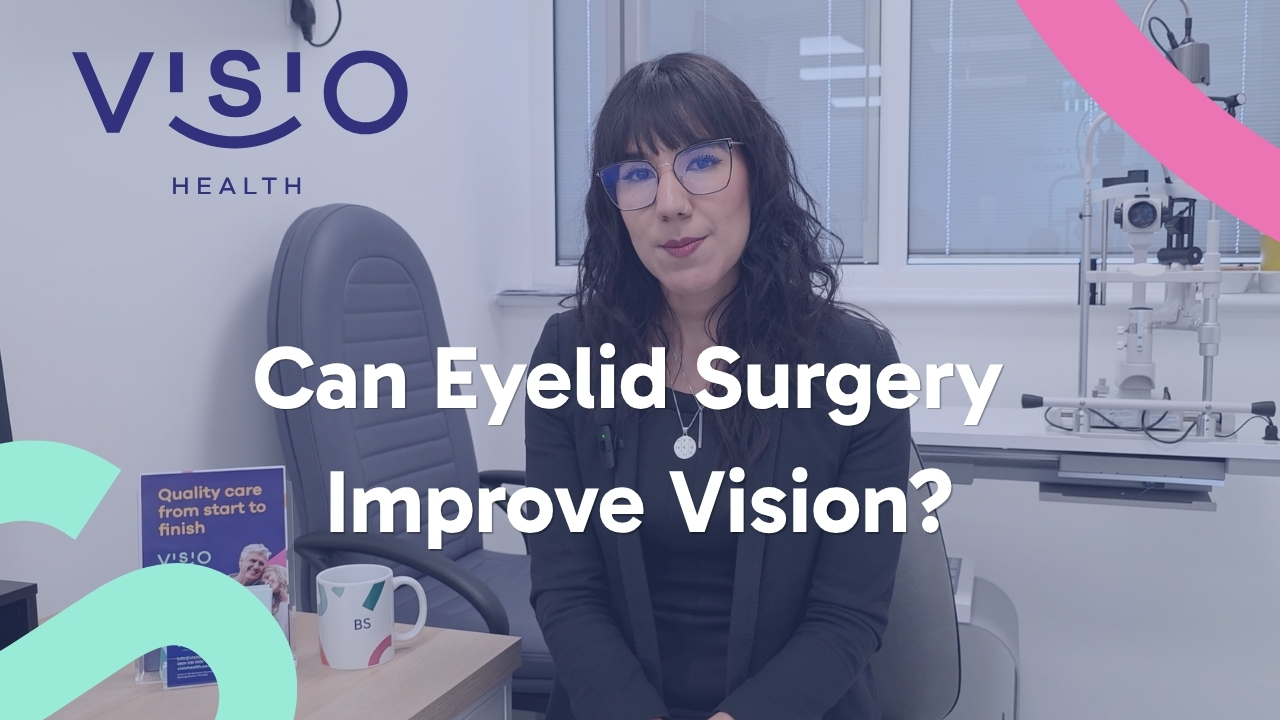
Eyelid surgery can improve the part of the visual field blocked by excess skin, ptosis or another eyelid-position problem in suitable patients. It will not correct reduced vision caused by cataract, retinal disease, glaucoma or an uncorrected glasses prescription.
Written by Sanjog Sandhu. Clinically reviewed and approved by Ms Bhavna Sharma.
Key points
• Eyelid surgery can improve the part of the visual field blocked by excess skin, ptosis or another eyelid-position problem in suitable patients.
• Assessment looks at how the eyelids sit, close and blink, whether the brow or forehead is compensating, the tear film and exposed surface of the eye.
• Eyelid treatment is not one standard operation.
• A painful red eye, light sensitivity, sudden visual change, an injury, or a red eye in a contact-lens wearer needs urgent clinical advice.
Understanding the question
Dry eye is a problem with the quantity, quality or stability of the tears. Eyelid inflammation, blocked meibomian glands, incomplete blinking, contact lenses, medicines and environmental factors can all contribute. Watery eyes can sometimes be a response to an unstable or irritated surface.
Your symptoms, examination findings and priorities need to be considered together before advice or treatment is recommended.
What the assessment looks for
Assessment should look at symptoms, vision, the eyelids and meibomian glands, blinking, tear stability and staining of the ocular surface. Treatment should address the pattern found rather than relying on one universal drop or device.
The purpose of testing is not to collect numbers. It is to decide which finding explains the person’s concern, whether another condition is present and which options remain sensible. A result should therefore be discussed alongside symptoms and examination, not read in isolation.
What treatment can and cannot do
Treatment should have a clear aim that can be explained in ordinary language. It may improve comfort, protect the eye, reduce double vision, control disease or improve a particular part of vision. It cannot guarantee perfect vision, symmetry, permanent freedom from symptoms or freedom from glasses. The balance between benefit, burden, alternatives and risk is personal and should be recorded in the consent discussion.
What may influence the individual plan
The answer can change according to:
• whether the concern is affecting sight, comfort, protection of the eye or appearance;
• whether dry eye, allergy, inflammation or another eye condition is contributing;
• whether the change is stable, gradual or new;
• the likely benefit, limits and risks of observation, surface treatment or a procedure.
This is why a general video can explain the principles but cannot replace an examination or a personalised consent discussion.
Treatment, monitoring and next steps
Management may include lubricating drops, regular breaks from prolonged screen use, warm compresses, lid hygiene and prescribed anti-inflammatory or antimicrobial treatment when clinically appropriate. The exact tests and treatments recommended will depend on your assessment and what is clinically appropriate for you.
Eyelid treatment is not one standard operation. The useful plan may be observation, treatment of the eye surface, a minor procedure or surgery. The starting point is the function of the eyelid and the health of the eye, not a photograph alone.
If observation is chosen, the plan should say what is being monitored, when it will be reviewed and which change should bring the appointment forward. If treatment is advised, the patient should understand its purpose, alternatives, likely recovery and the important risks for that eye.
Preparing for a useful consultation
You can make the first appointment more useful if you:
• note when the change began and whether it varies through the day;
• bring an up-to-date medicines list and details of previous eye or facial treatment;
• bring older photographs if they show a genuine change;
• avoid wearing eye make-up to the assessment if possible.
At VISIO, adults can normally contact the patient-services team directly. An optometrist, GP or another consultant can also refer. If you are using insurance, check referral and pre-authorisation requirements with the insurer before the appointment. Dilation may be needed, so ask whether you should arrange transport.
Questions worth bringing with you
• What is the most likely explanation for my symptoms or test result?
• Which findings matter most, and is anything else contributing?
• What are the reasonable choices, including observation?
• What result is realistic for my eye, and what cannot be promised?
• Which change should make me seek help sooner?
It is reasonable to take notes or bring someone you trust. The goal is not to make a rushed decision. It is to leave knowing what the consultant thinks, why, and what happens next.
When to seek urgent help
A painful red eye, light sensitivity, sudden visual change, an injury, or a red eye in a contact-lens wearer needs urgent clinical advice. VISIO does not currently offer IPL for dry eye, so it must not be presented as a current booking option.
VISIO is not a 24-hour emergency service. If an urgent problem occurs when the clinic cannot assess you promptly, use NHS 111 or the nearest emergency eye service or A&E as appropriate. Call 999 for a life-threatening emergency.
Frequently asked questions
Does one treatment suit everyone?
No. The diagnosis, severity, eye health, previous response and personal priorities change what is appropriate.
What happens if I choose not to have treatment now?
Ask what monitoring is needed, what may happen without treatment and which symptoms should bring the review forward.
What should I ask before a procedure around the eye?
Ask what diagnosis is being treated, what the realistic aim is, how the eye surface will be protected, what alternatives exist and which symptoms need urgent advice afterwards.
Can an eyelid problem affect the eye itself?
Yes. Poor closure, an in-turning lid or lashes rubbing the eye can disturb the tear film or damage the corneal surface. The examination checks function as well as appearance.
Can both eyelids be treated in exactly the same way?
Not always. Eyelids are rarely perfectly symmetrical, and the cause or degree of change can differ between sides. Planning is based on measurements and examination.
Will treatment make my eyelids perfectly symmetrical?
No responsible clinician can promise perfect symmetry. The aim, expected improvement and natural variation should be discussed before any procedure.
Book or ask VISIO Health
If this question is affecting your sight, comfort or confidence, contact VISIO Health in Wooburn Green for advice about the appropriate consultant assessment.
Call or WhatsApp: 0800 032 2020
Email: [email protected]
Online: use the Book a Consultation or Contact form
VISIO is a family-run, consultant-led private ophthalmology clinic for adults. A consultation is used to understand the whole eye, discuss appropriate options and agree the next step. It is not a promise that a particular treatment will be suitable.
Sources and editorial method
• NHS: Dry eyes: https://www.nhs.uk/symptoms/dry-eyes/
• Moorfields: Blepharitis diagnosis and treatment: https://www.moorfields.nhs.uk/eye-conditions/blepharitis/diagnosis-and-treatment
• Supporting editorial context: NHS and NHS eye-hospital patient information on eyelid symptoms, surgery and eye-surface care.
• Approved VISIO source: Website Content Source Of Truth, checked for the current service pathway and practical details.