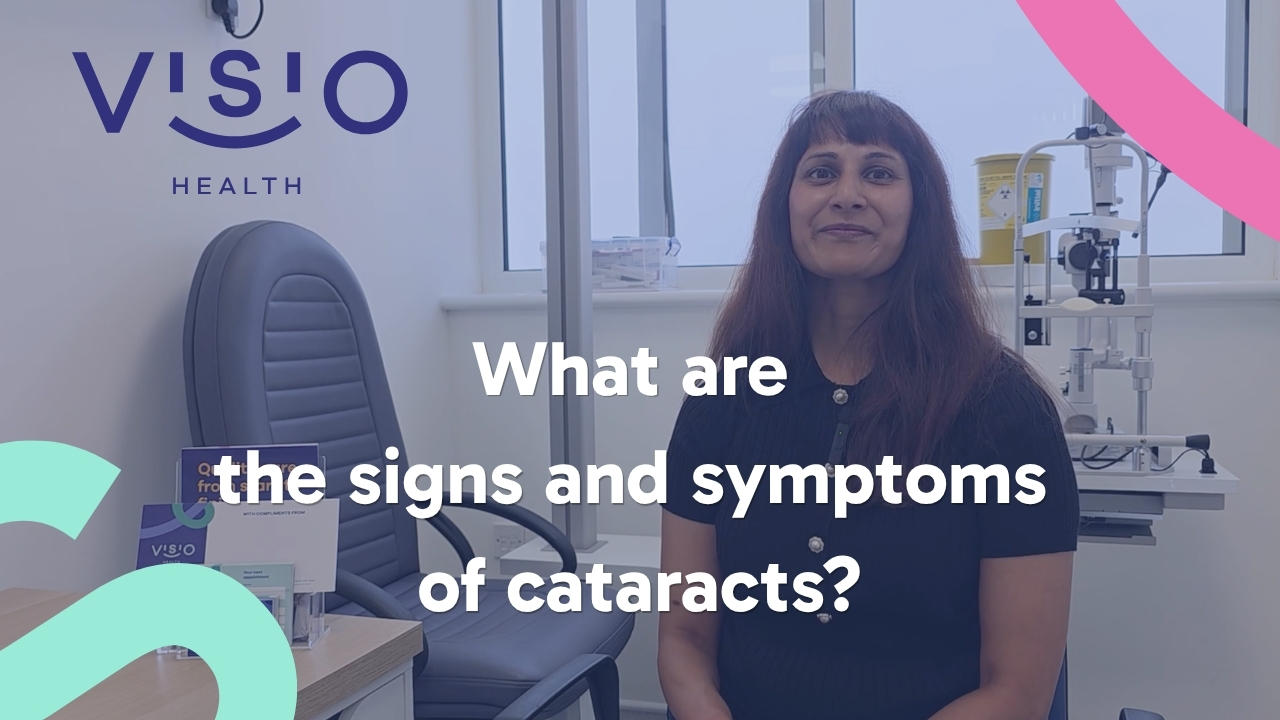
Cataracts commonly cause gradually blurred or dim vision, glare from lights, faded colours, difficulty reading and more trouble driving at night. A changing glasses prescription can also be a clue, but an eye examination is needed because other conditions can cause similar symptoms.
Written by Sanjog Sandhu. Clinically reviewed and approved by Ms Mala Subash.
Key points
• Cataracts commonly cause gradually blurred or dim vision, glare from lights, faded colours, difficulty reading and more trouble driving at night.
• Assessment looks at how vision affects driving, reading, work, hobbies and confidence, refraction, eye pressure and a full eye examination, OCT of the retina and macula.
• Cataract surgery replaces the cloudy natural lens with an artificial lens.
• New severe pain, marked redness or a sudden reduction in vision after surgery needs urgent advice from the treating eye service.
Understanding the question
A cataract is clouding of the eye’s natural lens. Treatment decisions should be based on how the cataract affects everyday life, the health of the whole eye and the person’s priorities, not on a single vision-chart number.
Your symptoms, examination findings and priorities need to be considered together before advice or treatment is recommended.
What the assessment looks for
A cataract assessment should confirm the diagnosis and look for other causes of reduced vision. At VISIO, the agreed pathway includes refraction, eye-pressure measurement, slit-lamp examination, OCT, Pentacam corneal tomography and optical biometry when appropriate for surgical planning.
The purpose of testing is not to collect numbers. It is to decide which finding explains the person’s concern, whether another condition is present and which options remain sensible. A result should therefore be discussed alongside symptoms and examination, not read in isolation.
A useful symptom history
Small details can narrow the possibilities: one eye or both, sudden or gradual, constant or intermittent, painful or painless, and whether blinking, covering one eye, changing focus or moving the eyes alters the symptom. Note any associated redness, light sensitivity, headache, flashes, floaters, distortion or shadow. This does not replace examination, but it gives the clinician a much clearer starting point.
What may influence the individual plan
The answer can change according to:
• whether the cataract is the main reason vision is reduced;
• whether surgery is likely to provide a worthwhile benefit now;
• the chosen visual target, lens options and likely need for glasses;
• individual risks, recovery needs and the plan for the other eye.
This is why a general video can explain the principles but cannot replace an examination or a personalised consent discussion.
Treatment, monitoring and next steps
The consultant should explain realistic benefits, limitations, lens choices, individual risks and the likely need for glasses for some tasks. The same consultant normally assesses, operates and follows up the patient at VISIO, although exceptions must be explained.
Cataract surgery replaces the cloudy natural lens with an artificial lens. The decision is based on daily-life impact, whole-eye health, likely benefit and informed choice, not a vision-chart number alone.
If observation is chosen, the plan should say what is being monitored, when it will be reviewed and which change should bring the appointment forward. If treatment is advised, the patient should understand its purpose, alternatives, likely recovery and the important risks for that eye.
Preparing for a useful consultation
You can make the first appointment more useful if you:
• write down the tasks and distances that matter most to you;
• bring your glasses, medicines list and previous eye records if available;
• follow advice about contact lenses before biometry or corneal measurements;
• plan transport if dilating drops will be used.
At VISIO, adults can normally contact the patient-services team directly. An optometrist, GP or another consultant can also refer. If you are using insurance, check referral and pre-authorisation requirements with the insurer before the appointment. Dilation may be needed, so ask whether you should arrange transport.
Questions worth bringing with you
• What is the most likely explanation for my symptoms or test result?
• Which findings matter most, and is anything else contributing?
• What are the reasonable choices, including observation?
• What result is realistic for my eye, and what cannot be promised?
• Which change should make me seek help sooner?
It is reasonable to take notes or bring someone you trust. The goal is not to make a rushed decision. It is to leave knowing what the consultant thinks, why, and what happens next.
When to seek urgent help
New severe pain, marked redness or a sudden reduction in vision after surgery needs urgent advice from the treating eye service. Exact drops, activity restrictions and follow-up instructions must come from the current VISIO leaflet and treating consultant.
VISIO is not a 24-hour emergency service. If an urgent problem occurs when the clinic cannot assess you promptly, use NHS 111 or the nearest emergency eye service or A&E as appropriate. Call 999 for a life-threatening emergency.
Frequently asked questions
Could this symptom still be caused by my glasses?
It might be, but a stable prescription does not rule out a change in the cornea, lens, retina, optic nerve, eye surface or eye alignment.
What should I record before the appointment?
Note the start, speed of change, one eye or both, triggers, pain, redness and any flashes, floaters, distortion, shadow or double vision.
Will cataract surgery remove the need for glasses?
Not necessarily. The likely need for glasses depends on the chosen target, lens, astigmatism, eye health, healing and the tasks you want to do.
Why are OCT, Pentacam and biometry used?
They examine different parts of the eye. OCT checks the retina and macula, Pentacam maps the cornea, and biometry helps calculate lens power.
Will the same consultant look after me?
At VISIO, the consultant who assesses you normally performs the surgery and oversees follow-up. Any necessary exception should be explained.
Can another eye condition change the expected result?
Yes. Corneal, retinal, optic-nerve, glaucoma or surface disease can affect visual potential and lens choice.
Book or ask VISIO Health
If this question is affecting your sight, comfort or confidence, contact VISIO Health in Wooburn Green for advice about the appropriate consultant assessment.
Call or WhatsApp: 0800 032 2020
Email: [email protected]
Online: use the Book a Consultation or Contact form
VISIO is a family-run, consultant-led private ophthalmology clinic for adults. A consultation is used to understand the whole eye, discuss appropriate options and agree the next step. It is not a promise that a particular treatment will be suitable.
Sources and editorial method
• NICE NG77: Cataracts in adults, recommendations: https://www.nice.org.uk/guidance/ng77/chapter/Recommendations
• NHS: Cataract surgery: https://www.nhs.uk/tests-and-treatments/cataract-surgery/
• Supporting editorial context: NICE NG77 and NHS cataract surgery guidance, alongside approved VISIO cataract pathway facts.
• Approved VISIO source: Website Content Source Of Truth, checked for the current service pathway and practical details.