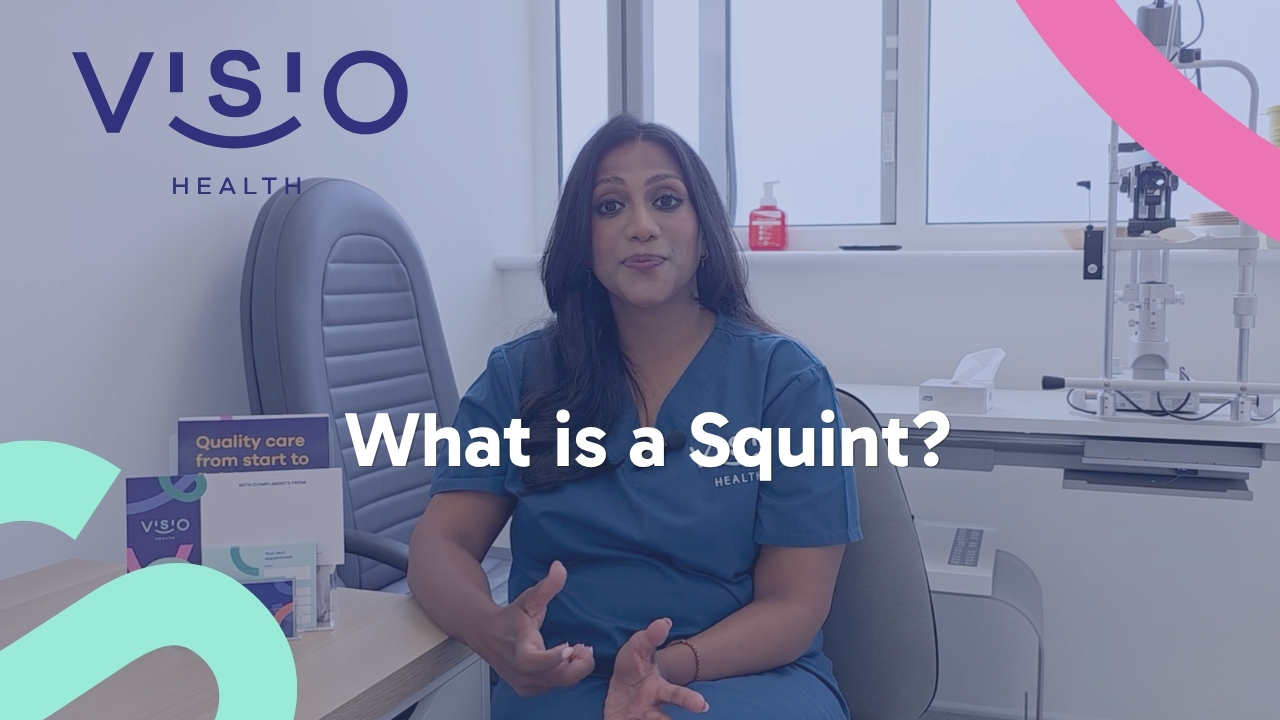
A squint is a misalignment in which the eyes do not point in the same direction. It can turn inward, outward, upward or downward and may affect vision, depth perception, comfort, confidence or appearance.
Written by Sanjog Sandhu. Clinically reviewed and approved by Ms Meena Arun.
Key points
• A squint is a misalignment in which the eyes do not point in the same direction.
• Assessment looks at whether double vision disappears when either eye is covered, vision, refraction and eye health in each eye, eye alignment and movements at distance and near.
• A squint is an alignment problem, while double vision is a symptom with several possible causes.
• Sudden double vision requires urgent advice through an urgent GP appointment or NHS 111.
Understanding the question
A squint, also called strabismus, means the eyes are not pointing in the same direction. In adults it can cause double vision, eye strain, difficulty judging depth, an unusual head posture or concern about appearance. A new squint can have several causes and should not be self-diagnosed.
Your symptoms, examination findings and priorities need to be considered together before advice or treatment is recommended.
What the assessment looks for
Assessment may include visual acuity, refraction, eye movements, alignment measurements in different gaze positions, binocular-vision tests and a medical and neurological history. Blood tests or scans may be arranged elsewhere when the findings suggest they are needed.
The purpose of testing is not to collect numbers. It is to decide which finding explains the person’s concern, whether another condition is present and which options remain sensible. A result should therefore be discussed alongside symptoms and examination, not read in isolation.
Why the definition changes the next step
Understanding adult squint, double vision and binocular vision matters because nearby conditions can sound similar but need different decisions. A patient-friendly label is helpful, yet the examination establishes the cause, severity and effect on the rest of the eye. That is what turns a definition into a safe plan.
What may influence the individual plan
The answer can change according to:
• whether the symptom is monocular blur or binocular double vision;
• whether a new cause needs urgent medical investigation;
• whether glasses, prism, observation, exercises in selected cases or surgery may help;
• the functional and appearance goals that matter to the patient.
This is why a general video can explain the principles but cannot replace an examination or a personalised consent discussion.
Treatment, monitoring and next steps
Treatment depends on the cause and may include updated glasses, prisms, exercises for selected problems, temporary occlusion, treatment of an underlying condition or squint surgery. The aim and limitations should be agreed with the patient before treatment.
A squint is an alignment problem, while double vision is a symptom with several possible causes. In adults, especially when the change is new, the priority is to understand why it happened before choosing treatment.
If observation is chosen, the plan should say what is being monitored, when it will be reviewed and which change should bring the appointment forward. If treatment is advised, the patient should understand its purpose, alternatives, likely recovery and the important risks for that eye.
Preparing for a useful consultation
You can make the first appointment more useful if you:
• note whether covering either eye removes the second image;
• record when symptoms started and whether they vary with direction or tiredness;
• bring current glasses, prism prescriptions and older photographs;
• do not drive while double vision makes driving unsafe.
At VISIO, adults can normally contact the patient-services team directly. An optometrist, GP or another consultant can also refer. If you are using insurance, check referral and pre-authorisation requirements with the insurer before the appointment. Dilation may be needed, so ask whether you should arrange transport.
Questions worth bringing with you
• What is the most likely explanation for my symptoms or test result?
• Which findings matter most, and is anything else contributing?
• What are the reasonable choices, including observation?
• What result is realistic for my eye, and what cannot be promised?
• Which change should make me seek help sooner?
It is reasonable to take notes or bring someone you trust. The goal is not to make a rushed decision. It is to leave knowing what the consultant thinks, why, and what happens next.
When to seek urgent help
Sudden double vision requires urgent advice through an urgent GP appointment or NHS 111. Call 999 or attend A&E for double vision with a severe headache and enlarged pupil, or after a head injury. VISIO’s orthoptic and squint pathway is for adults aged 18 and over only.
VISIO is not a 24-hour emergency service. If an urgent problem occurs when the clinic cannot assess you promptly, use NHS 111 or the nearest emergency eye service or A&E as appropriate. Call 999 for a life-threatening emergency.
Frequently asked questions
Can this be diagnosed from a description alone?
No. The description can guide urgency, but diagnosis requires the appropriate eye examination and sometimes imaging or measurements.
Can both eyes be affected?
Many eye conditions can affect both eyes but not always to the same degree or at the same time. Each eye is assessed separately.
Why is sudden double vision important?
A new eye-movement problem can have neurological, vascular, muscular or eye-related causes. Sudden symptoms need prompt assessment, especially with weakness, severe headache or pupil change.
What does an orthoptist do?
An orthoptist measures eye alignment, movements and binocular function and can assess options such as prisms in collaboration with the ophthalmologist.
Can prism glasses cure a squint?
Prisms can help some people manage double vision by moving images together. They do not remove every cause or permanently straighten the eyes.
Can adults have squint surgery?
Yes. Surgery may improve alignment, double vision, head posture or confidence in suitable adults, but the outcome and risks need individual discussion.
Book or ask VISIO Health
If this question is affecting your sight, comfort or confidence, contact VISIO Health in Wooburn Green for advice about the appropriate consultant assessment.
Call or WhatsApp: 0800 032 2020
Email: [email protected]
Online: use the Book a Consultation or Contact form
VISIO is a family-run, consultant-led private ophthalmology clinic for adults. A consultation is used to understand the whole eye, discuss appropriate options and agree the next step. It is not a promise that a particular treatment will be suitable.
Sources and editorial method
• NHS: Double vision: https://www.nhs.uk/symptoms/double-vision/
• Moorfields: Strabismus: https://www.moorfields.nhs.uk/eye-conditions/strabismus-eye-squint
• Supporting editorial context: NHS and specialist NHS eye-hospital information on squint, adult double vision and squint surgery.
• Approved VISIO source: Website Content Source Of Truth, checked for the current service pathway and practical details.