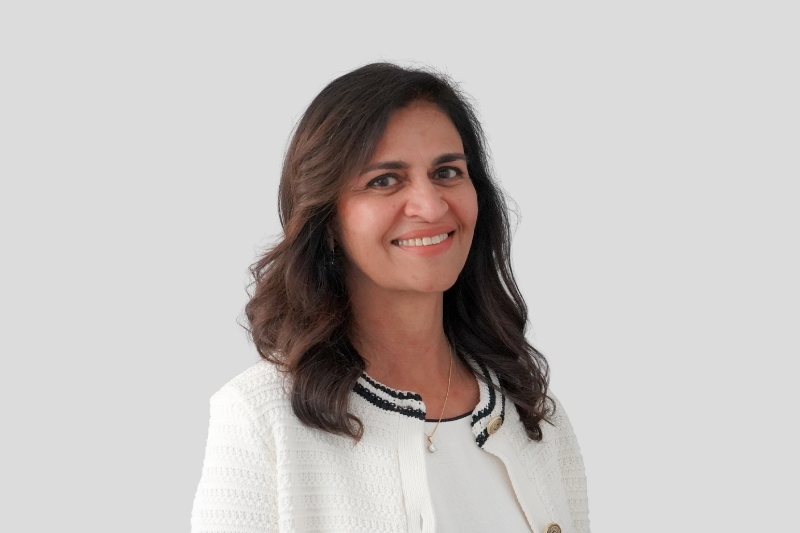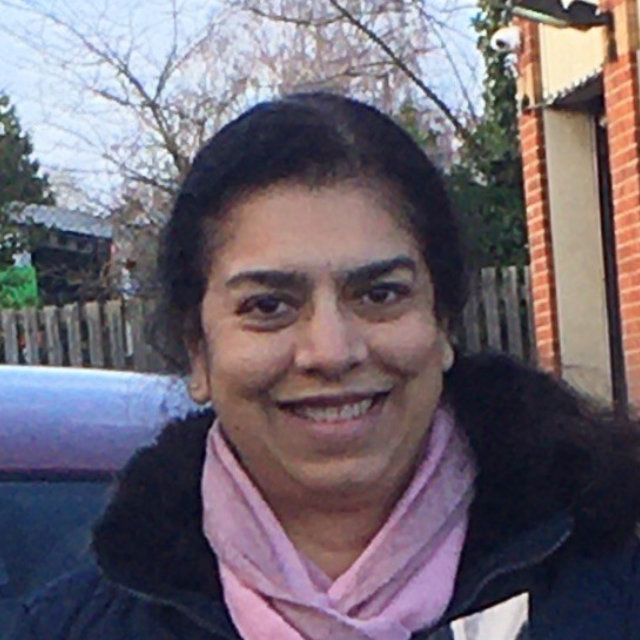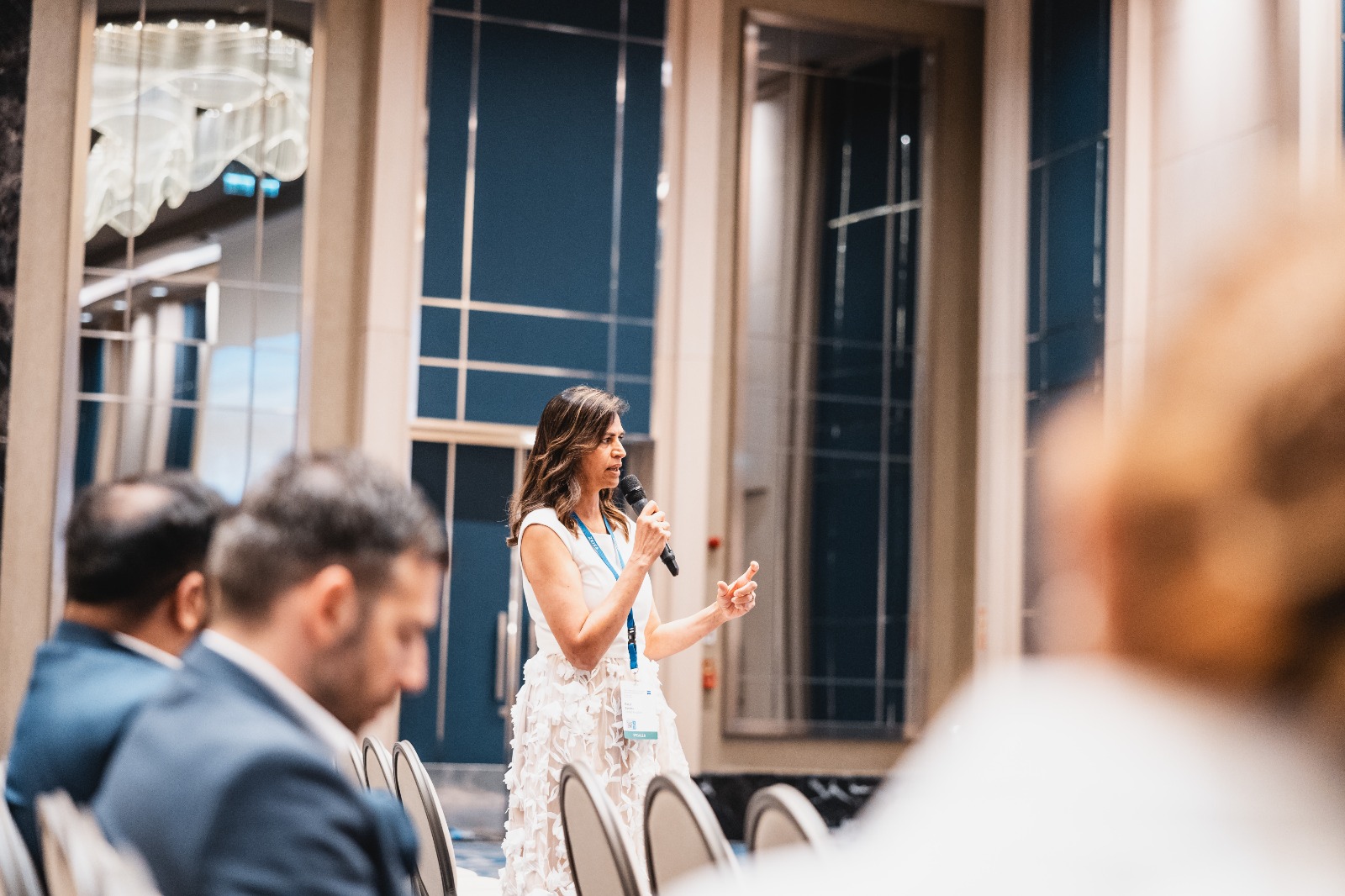
VISIO Health co-founders Sanjog Sandhu and Ms Ranjit Sandhu were both invited to present at the ZEISS EMEA Cataract & Corneal Refractive User Meeting in Istanbul from 5th to 7th June 2026. Sanjog spoke about wellbeing, human connection and VISIO’s early experience of guided meditation around cataract surgery. Ranjit brought two complex cataract cases to the international faculty for open discussion. The meeting gave the VISIO team the chance to learn from clinicians and practice leaders across Europe, the Middle East and Africa, and to bring fresh thinking home to Buckinghamshire.
Why difficult cases are worth discussing in public
Most cataract surgery is routine, predictable and quick. A small proportion is not, usually because the eye has more than one thing going on.
Conference case sessions exist for that minority. They are where surgeons put a genuinely difficult decision in front of a room of peers and ask what they would do. Nobody learns much from a case that went perfectly. A lot is learned from a case where two reasonable surgeons would choose differently.
Ranjit, known to the VISIO team as Binnie, took two of those cases to Istanbul.
Case one: a dense cataract with glaucoma and uveitis
Her main-stage contribution to Session 9, I Will Survive: Turning Nightmare Cases into Success Stories, examined a demanding case in which a dense cataract sat alongside glaucoma and uveitis in the same eye.
In plain terms: the cataract itself was hard and cloudy, which makes surgery more demanding. Glaucoma involves damage to the optic nerve, often associated with pressure inside the eye, so anything that raises pressure needs careful handling. Uveitis is inflammation inside the eye, and an eye prone to inflammation can react more strongly to surgery.
Each of those is manageable on its own. Together, they change the calculation. The tissues may behave less predictably, the view during surgery can be poorer, the risk of a post-operative pressure rise or inflammatory flare is higher, and the visual outcome depends partly on nerve health that surgery cannot improve.
The point of the session was not to make a difficult case sound simple. It was to show the preparation, the sequencing decisions, the judgement calls, and the honest uncertainty involved when several clinical problems overlap in one eye.
Case two: seven years of perfect vision, then a dilemma
In Focus Session F, From Theory to Practice: Lessons from Video Case Reviews in Complex Cataract Surgery, Ranjit presented 7 Years of Perfect Vision with a Trifocal IOL: The Surgeon’s Dilemma.
A trifocal intraocular lens is designed to give clear vision at distance, intermediate and near range, reducing dependence on glasses. It is a precise piece of engineering and it relies on staying exactly where it was placed.
This patient had seven years of excellent vision from theirs. The complication came later, from pseudoexfoliation: a condition in which flaky material builds up inside the eye and can weaken the fine structures that hold the lens in position. Over time, that weakening can allow a lens to shift, tilt or become unstable.
That creates a real dilemma. Intervening on a lens that has performed beautifully for seven years carries its own risk. Leaving an unstable lens carries a different one. There is no version of the decision that is free of trade-offs, and reasonable surgeons weigh them differently depending on the eye, the degree of instability, the patient’s priorities and their tolerance for further surgery.
Presenting that dilemma to an international faculty, rather than presenting a tidy result, is exactly the right use of a case session.
Live polling, and why disagreement is useful
Both sessions used questions and live polling to invite the room in.
Polling makes something visible that a lecture hides. When a room of experienced surgeons splits on what to do next, that split is the finding. It tells you the decision is genuinely balanced, that local practice and individual judgement carry real weight, and that confidence is not the same as certainty.
International meetings are most useful when surgeons can examine difficult decisions together, including the moments when there is no effortless answer.
What this means for VISIO patients
Not that your surgery will be complicated. Most cataract surgery is not.
What it means is that the surgeon assessing your eye takes part in the international conversation about the harder end of the spectrum, brings difficult cases to peers rather than working in isolation, and is willing to discuss uncertainty openly. That habit tends to show up in how a consultation feels: fewer sweeping promises, more explanation of the trade-offs that actually apply to your eye.
We are proud to see VISIO’s Consultant Ophthalmic Surgeon and co-founder representing an independent Buckinghamshire clinic on the EMEA stage.
The cases described here were shared for professional education. They are not medical advice and do not indicate what would be appropriate for another person’s eye. Individual cataract and lens decisions require a full assessment by a suitably qualified clinician.
Written by Sanjog Sandhu. Clinically reviewed by Ms Ranjit Sandhu, Consultant Ophthalmic Surgeon and Director
Frequently asked questions
What did Ms Ranjit Sandhu present at ZEISS EMEA?
Two complex cataract cases. One involved a dense cataract alongside glaucoma and uveitis. The other concerned the later management of a trifocal lens in an eye with pseudoexfoliation, after seven years of good vision.
What makes cataract surgery complex?
Usually the presence of other conditions in the same eye, such as glaucoma, uveitis, pseudoexfoliation, a very dense cataract, or previous eye surgery. These can affect how predictable the surgery is and what visual outcome is realistic.
What is pseudoexfoliation?
A condition in which flaky material accumulates inside the eye. It can weaken the structures that hold the natural or artificial lens in place, and it is associated with a higher risk of raised eye pressure. It is one of the factors a surgeon assesses before cataract surgery.
I have a trifocal lens. Should I be worried?
Not on the basis of a conference case. A single case discussion says nothing about your eye. If you have noticed a change in your vision, or you have been told you have pseudoexfoliation, speak to your ophthalmologist so your eye can be assessed properly.
Can these cases tell me what treatment I need?
No. Conference case discussions are educational and cannot determine what is suitable for another person. Cataract and lens decisions depend on individual eye health, measurements, symptoms, priorities and a full consultant assessment.
Where can I read about the rest of the ZEISS EMEA meeting?
The full VISIO recap, including Sanjog Sandhu’s wellbeing talk, is here:
Part 1
Part 2
Learn more about VISIO
If you are considering cataract surgery, you can learn more about VISIO’s consultant-led cataract pathway, assessment and lens discussions here: Cataract Surgery
If you are interested in VISIO Wellbeing, guided practices or support for healthcare teams and organisations, visit: Wellbeing Care
Call or WhatsApp: 0800 032 2020 Email: [email protected] Wellbeing enquiries: [email protected]
VISIO Health is a family-run, consultant-led private ophthalmology clinic for adults in Wooburn Green, Buckinghamshire.